
Kilimanjaro: The Best Time to Go - When You Should Really Climb
Kilimanjaro is not a single mountain but a stack of climate zones. From the base to high camps and the summit, conditions change dramatically. Here’s how temperatures, rain, wind and daylight shift throughout the year.
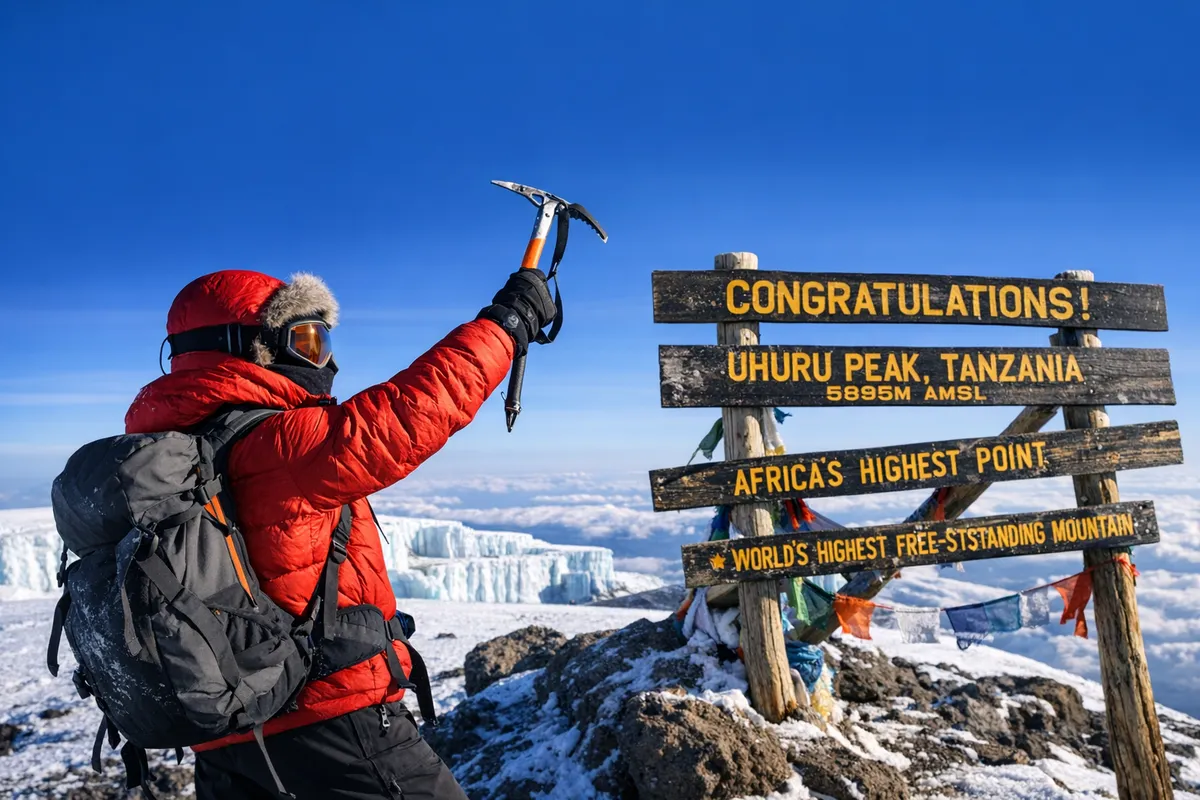
Kilimanjaro is not a mountain—it is a stack of climates
When you start planning Kilimanjaro, you quickly realise:
you are not simply planning a hike, but moving through several climate zones, which would otherwise be thousands of kilometres apart.
From the warm, humid base through rainforest, heath and alpine desert to a high-Arctic summit region—all on foot, in just a few days.
That is precisely why simply asking about the “best time to go” is not enough.
What matters is how temperature, precipitation, wind and daylight change over the course of the year—and what that means in practical terms for your gear, clothing and comfort.
I did a lot of research and found widely varying figures and relatively little long-term data. I have aggregated and visualised the available data here.
Temperature: steady below, brutal above
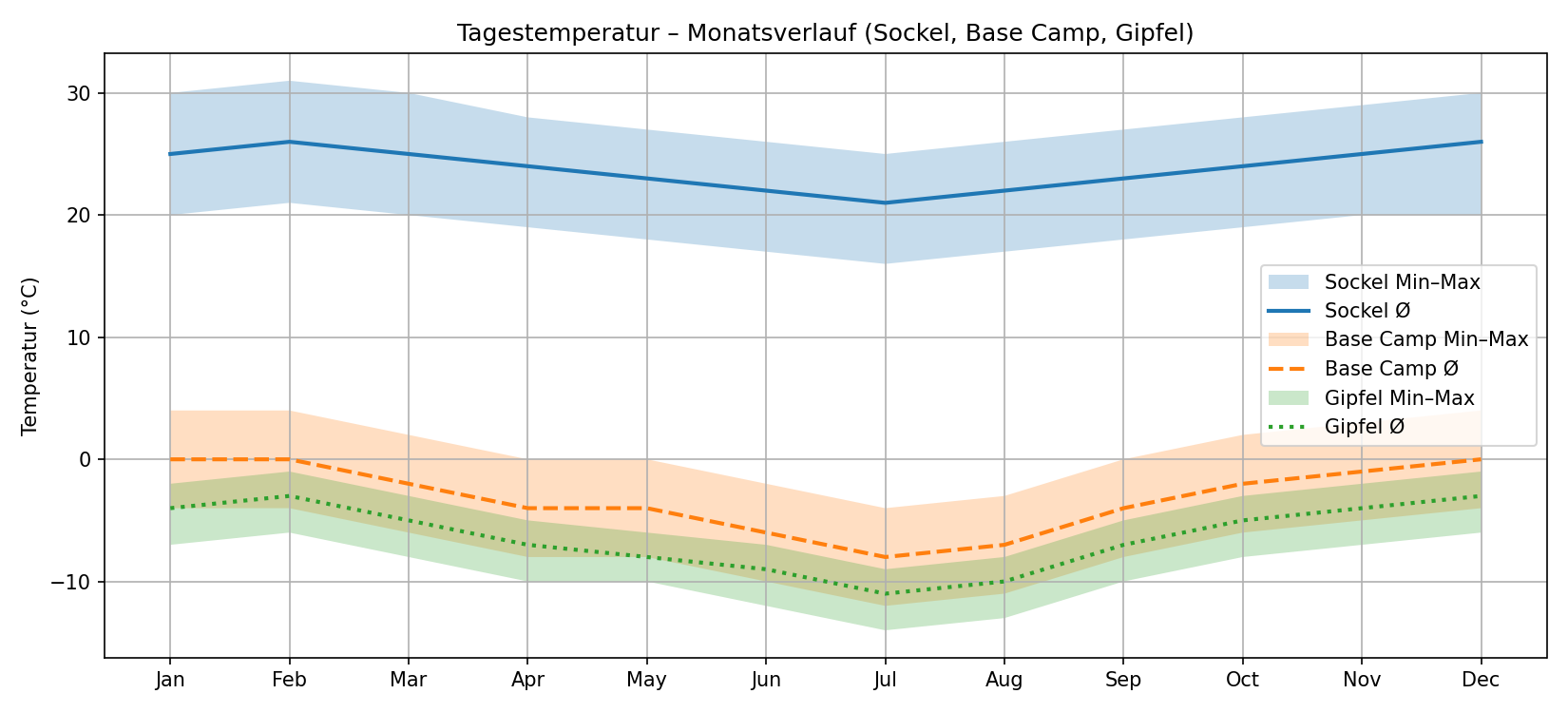
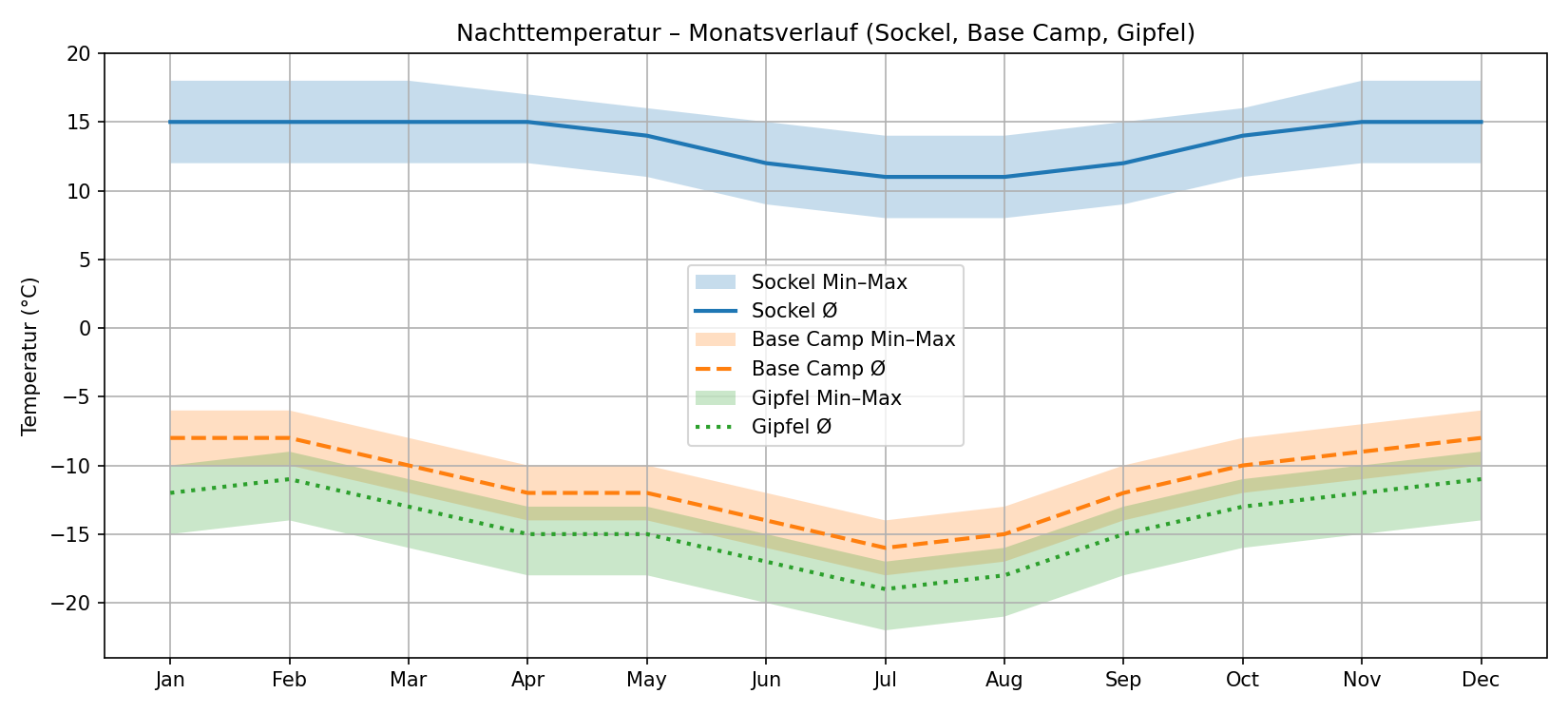
At the base, Kilimanjaro feels almost unremarkable: pleasantly warm year-round, manageable fluctuations, nothing alarming.
The summit tells a completely different story.
Even in the “warm” months, average daytime temperatures remain below freezing, with nights well below that. In the winter months of July and August, lows reach levels where gear is no longer optional but essential for survival.
What matters is not just the average, but the range:
The broad min–max bands show how quickly conditions can worsen—especially on summit night.
Precipitation: rain below, consequences above
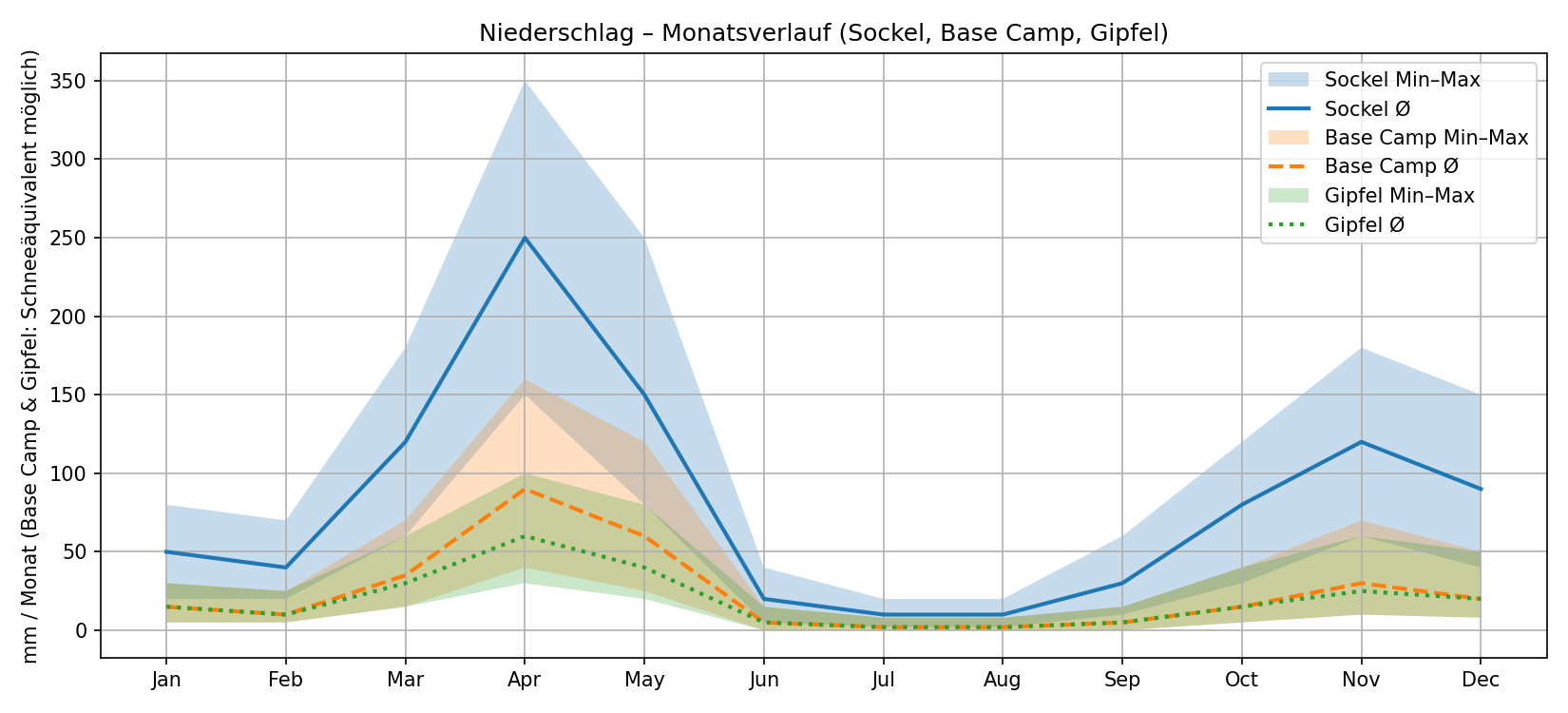
Two rainy seasons clearly shape the year:
the long rains from March to May, and the short rains in November.
At the base, that mainly means wet conditions and mud.
At the summit, however, precipitation often means snow, ice, icy conditions and poor visibility—even if the absolute amounts appear lower.
Viewing the charts for the different metrics in relation to one another makes it clear why “little precipitation” does not automatically mean “easy conditions”. The dry months in particular are often the coldest.
Wind: the underestimated factor
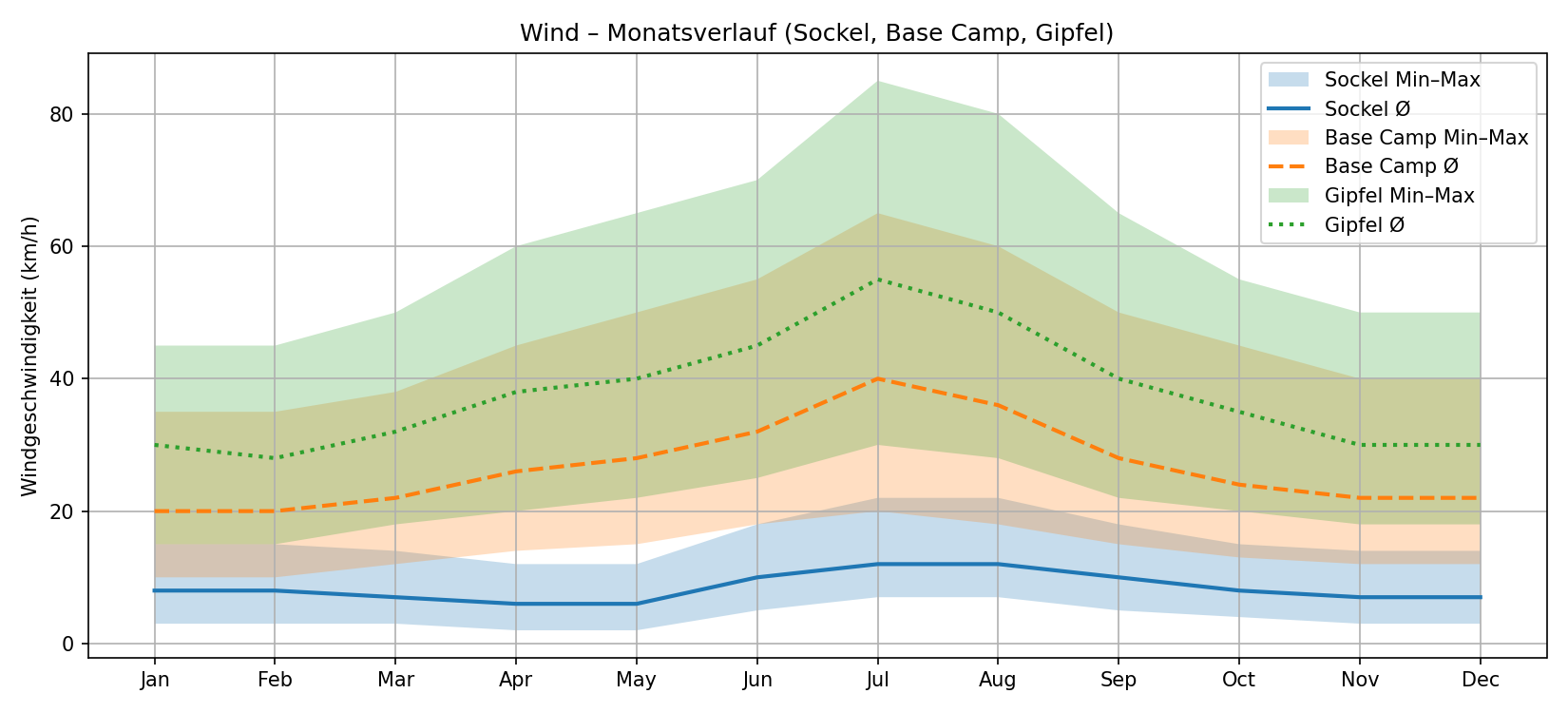
Wind is the factor many people underestimate—and the one that punishes you most at the summit.
While it is usually barely relevant lower down, higher up it regularly reaches speeds at which wind chill makes the perceived temperature significantly worse.
The East African summer months (June to August) are particularly windy.
That explains why this period is very popular, yet feels considerably harsher than the raw temperature figures suggest.
Daylight: (unsurprisingly) consistent
One particular feature of Kilimanjaro:
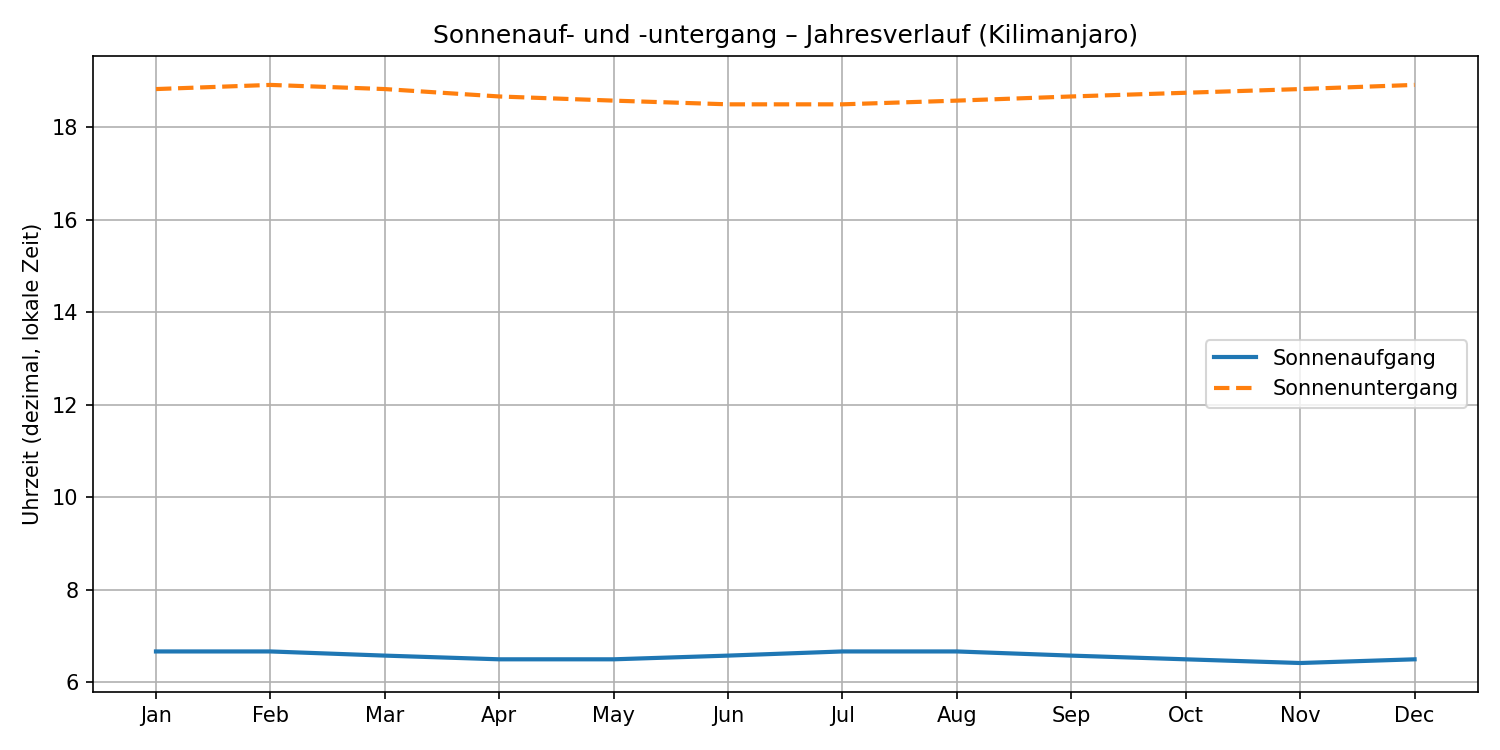
Its proximity to the equator means day length remains almost the same throughout the year.
Sunrise and sunset vary by only a few minutes.
For planning, that means: the seasons do not affect daylight, but primarily the climate and conditions. Your time windows on the mountain are determined by acclimatisation, route and summit day—not by the month.
Sleeping bag & clothing: this is where it gets real
When it comes to gear, all theory ends.
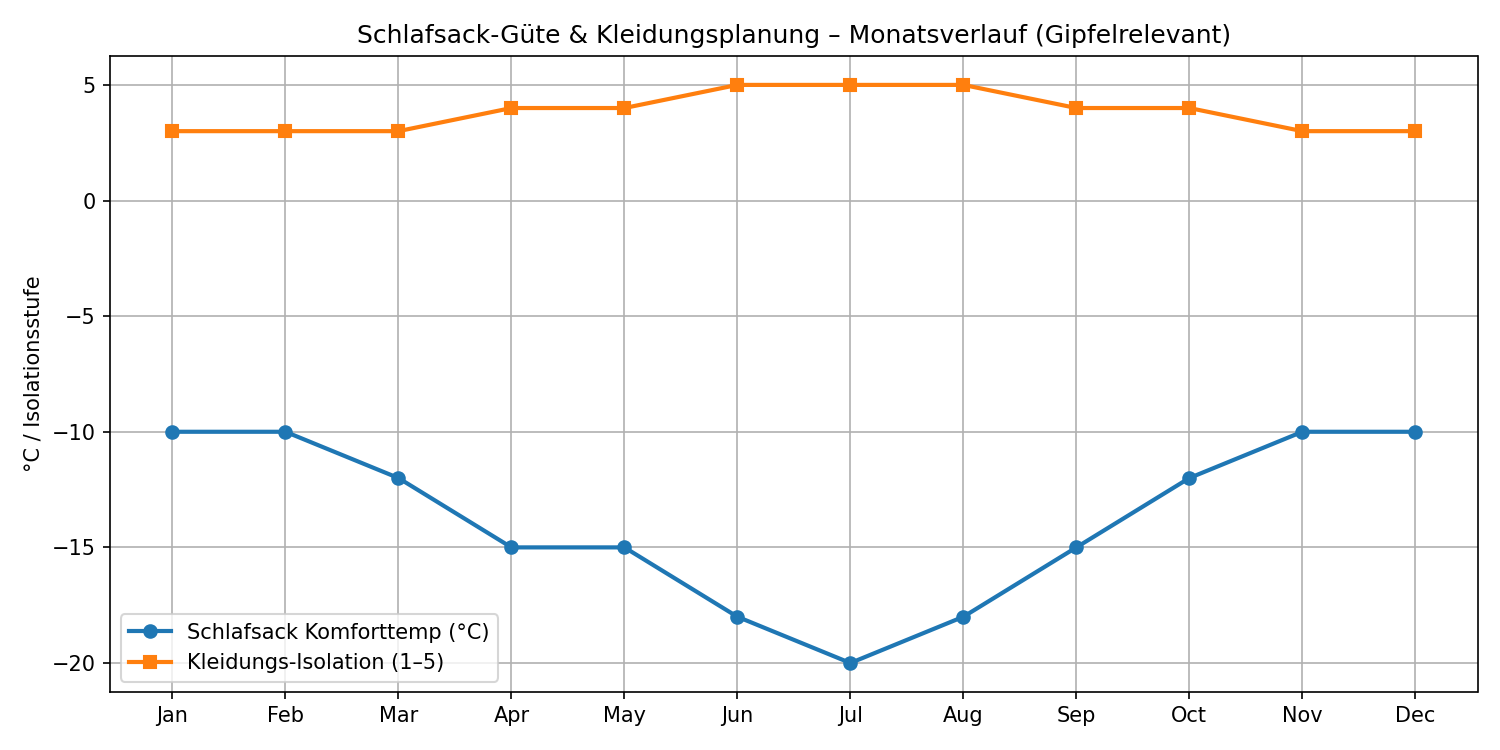
A sleeping bag is either adequate—or it is not. There is nothing in between.
The chart makes it clear:
- In the warm months, a −10°C comfort-rated sleeping bag
- is enough. In the transitional months, −12 to −15°C makes sense.
- In the dry, cold months of June to August, a −18 to −20°C comfort rating is essential
The same applies to clothing.
What counts is not how many items you have, but the level of insulation. Anyone attempting it in July or August with a “standard trekking setup” will not just feel a little cold—they will be cold all the time.
Conclusion: the right month is a decision, not a compromise
Kilimanjaro can be climbed at any time of year—but not every season is the same.
Every month shifts the balance between:
- Cold
- Wet
- Wind
- Comfort
- Risk
These charts are not a recommendation for one perfect time.
They are an invitation to make a conscious decision about what you are willing to accept—and what you are not.
For me, that is the essence of Project K:
Not simply setting off, but understanding what you are getting yourself into.

Join the conversation
Become a member of One More Step to leave a comment.