
Kilimanjaro – Day 5: Barranco Wall, Karanga Valley
The day begins in darkness and wind below the Barranco Wall. My fear of heights worries me more than the route itself, but the real challenge comes after the wall: relentless ups and downs, intense sun and persistent headaches.
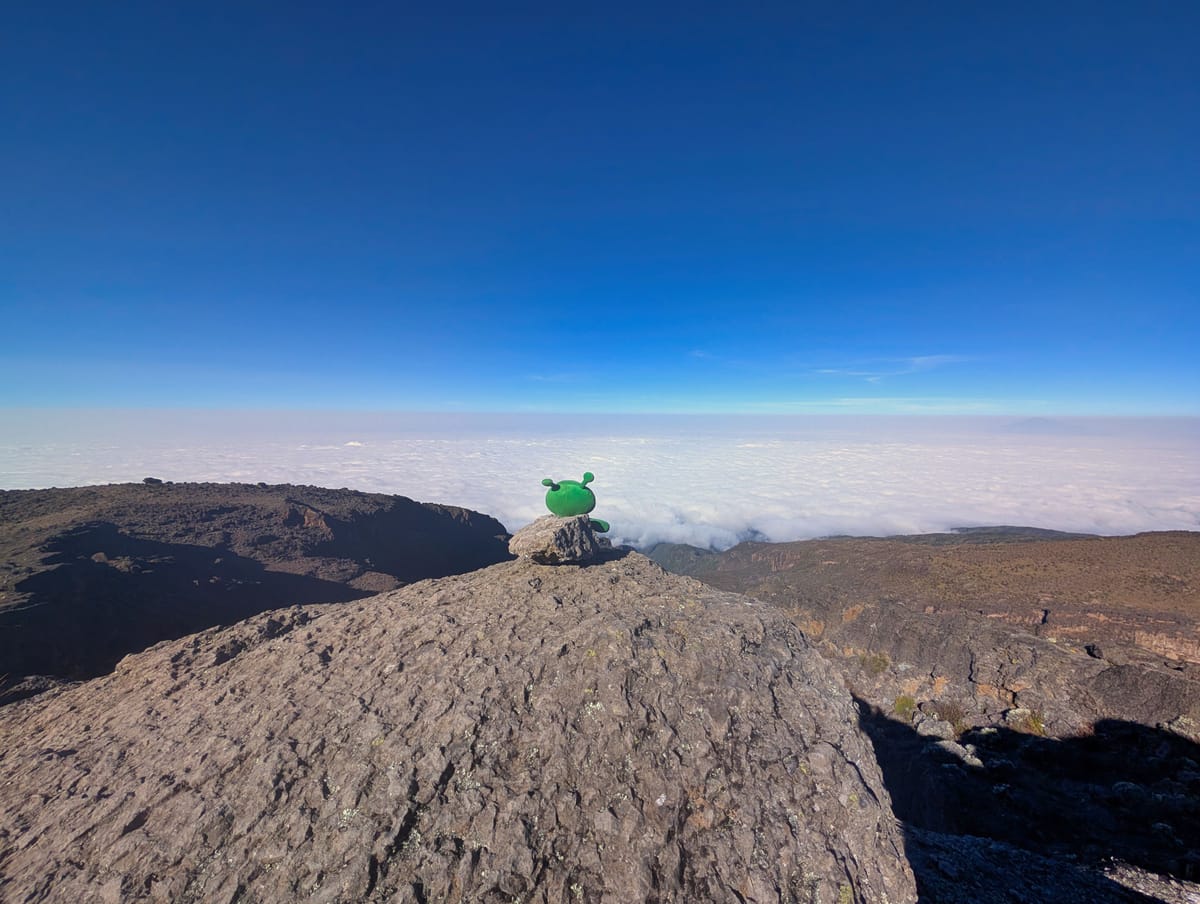
Overview
- Date: 23 July 2026
- Route: Barranco Camp → Barranco Wall → Karanga Camp
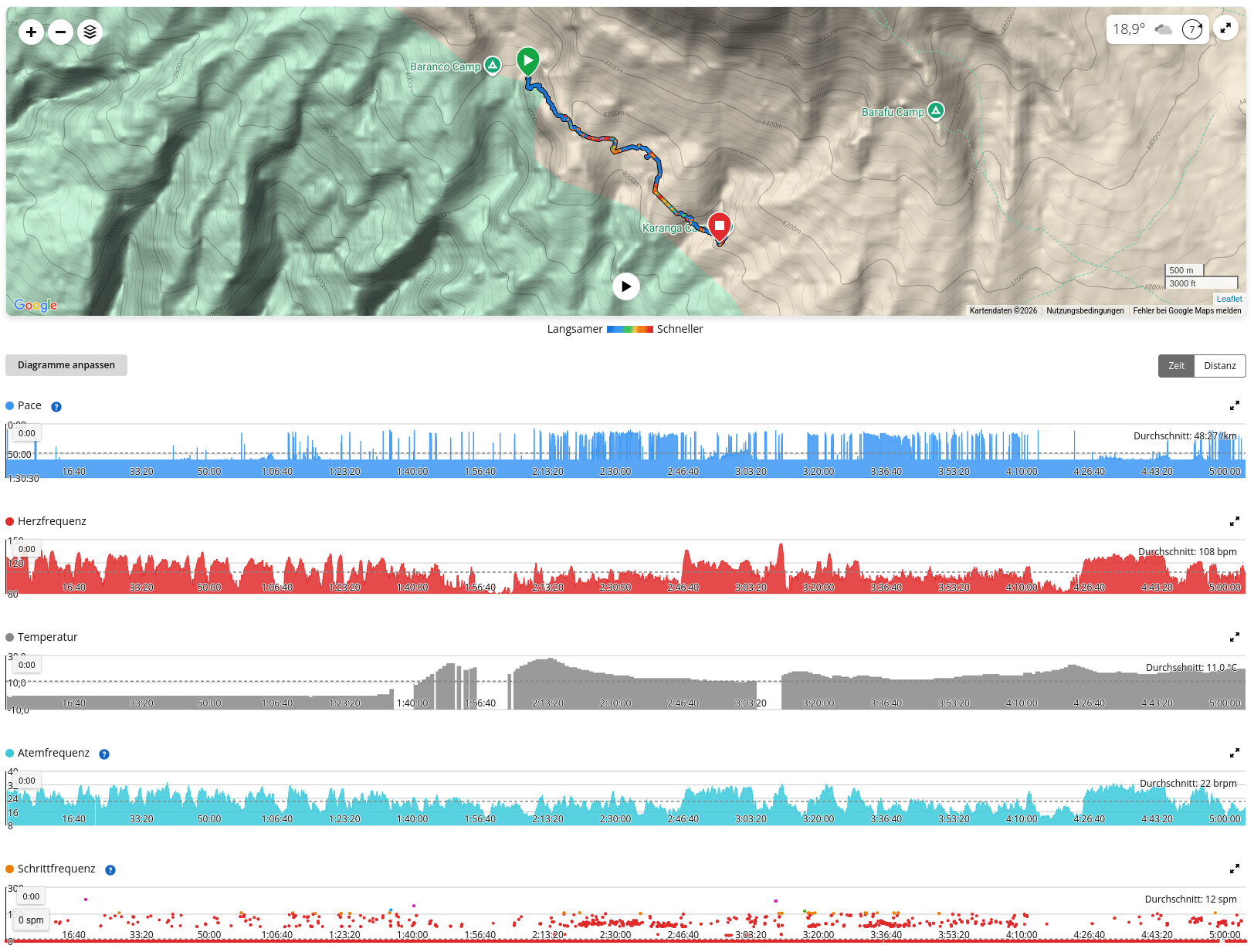
- Distance: 6.29 km
- Elevation gain/loss: ↑ 481 m · ↓ 441 m
- Recorded duration: 5:05 h
- Garmin calories burned: 1,201 kcal
- Elevation:
- Start 3,983 m
- highest point 4,231 m
- Finish, Karanga Camp: approx. 4,020 m
- Uphill gradient: avg. 12.7% / max. 30.7% over 50 m sections
- Downhill gradient: avg. 12.5% / max. 27.2% over 50 m sections
- Heart rate: avg. 108 / max. 145 bpm
- Temperature at backpack sensor: −1–23 °C*
- Pulse Ox / SpO₂: 84% (Garmin daily value; measurement elevation 3,847 m)
Route and landscape
By 5:53 a.m., I am already sitting in the breakfast tent. Outside, it is pitch-dark and very windy. The temperature is not necessarily lower than on the previous nights, but the wind makes the morning unpleasantly cold. Right in front of us is the Barranco Wall—and with it the section of the route I was most apprehensive about beforehand because of my pronounced fear of heights.
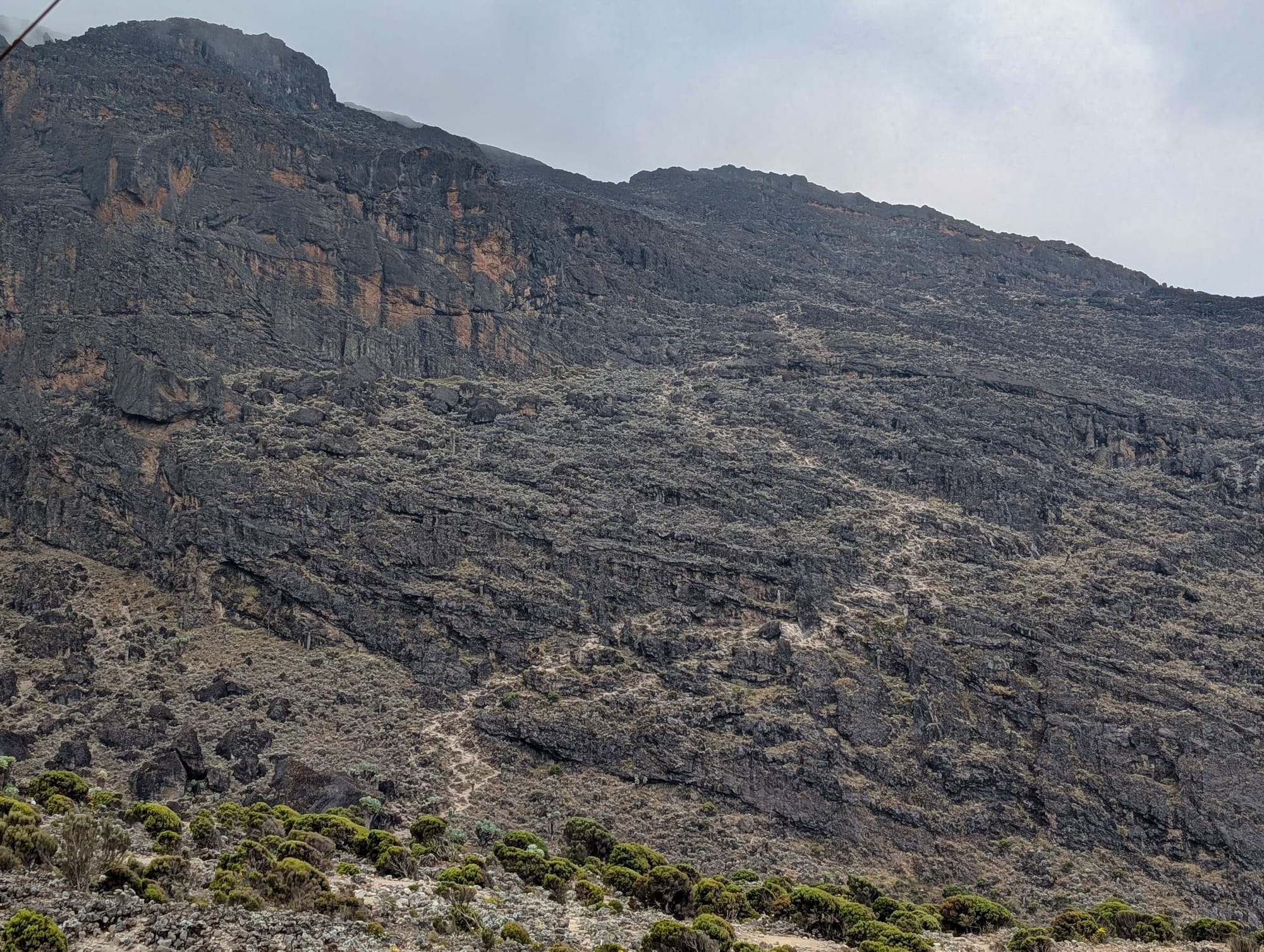
The available GPS track only begins shortly after the actual start, so I have added the beginning of the elevation profile at roughly 3,960 metres, the usual elevation of Barranco Camp. The gradient statistics, on the other hand, are based solely on the track that was actually recorded. It shows 6.29 kilometres for the entire stage, with 481 metres of ascent and 441 metres of descent. The average uphill 50-metre sections are just under 13%, while the steepest are a good 30%. Going downhill is hardly any more relaxed.
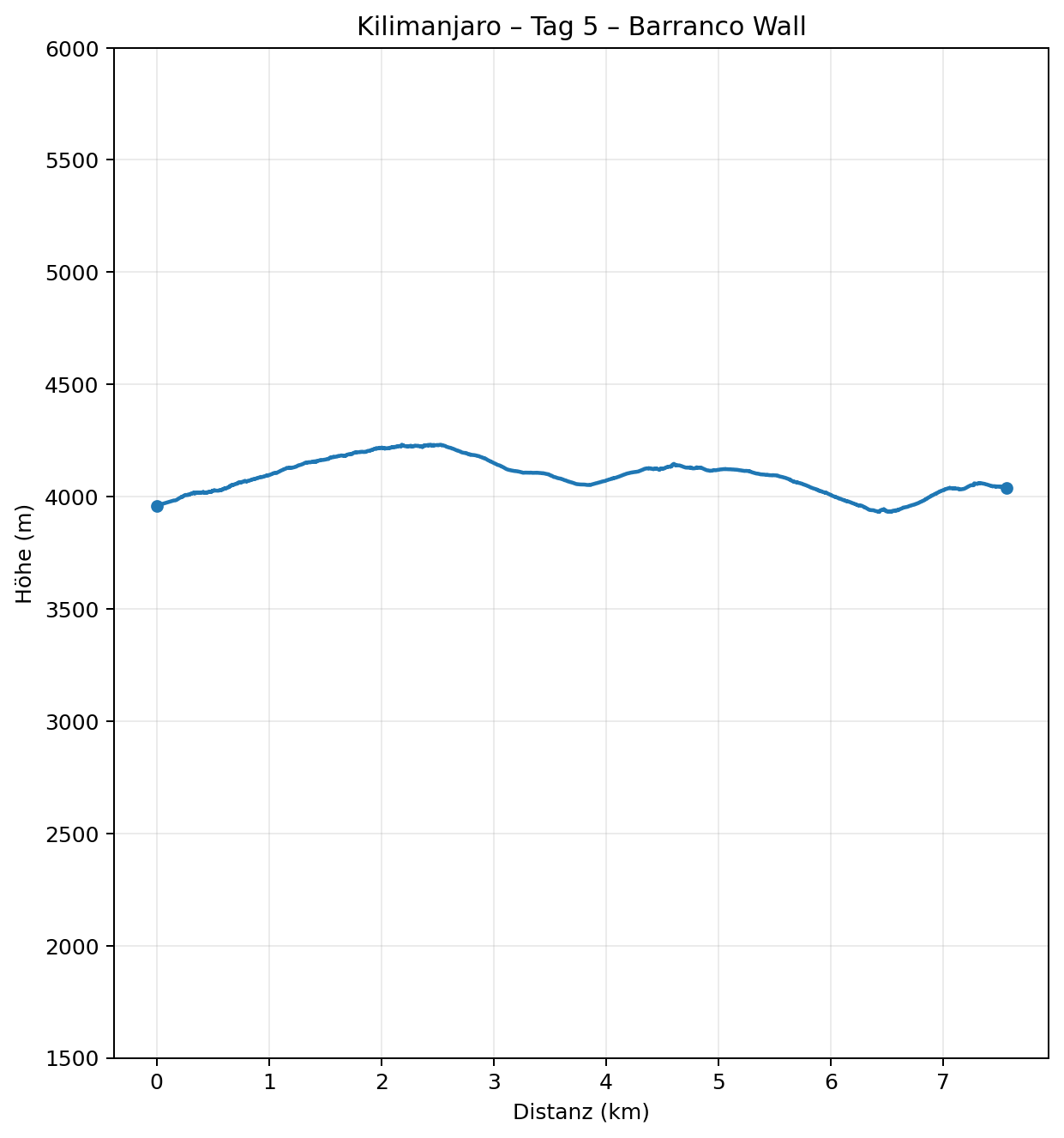
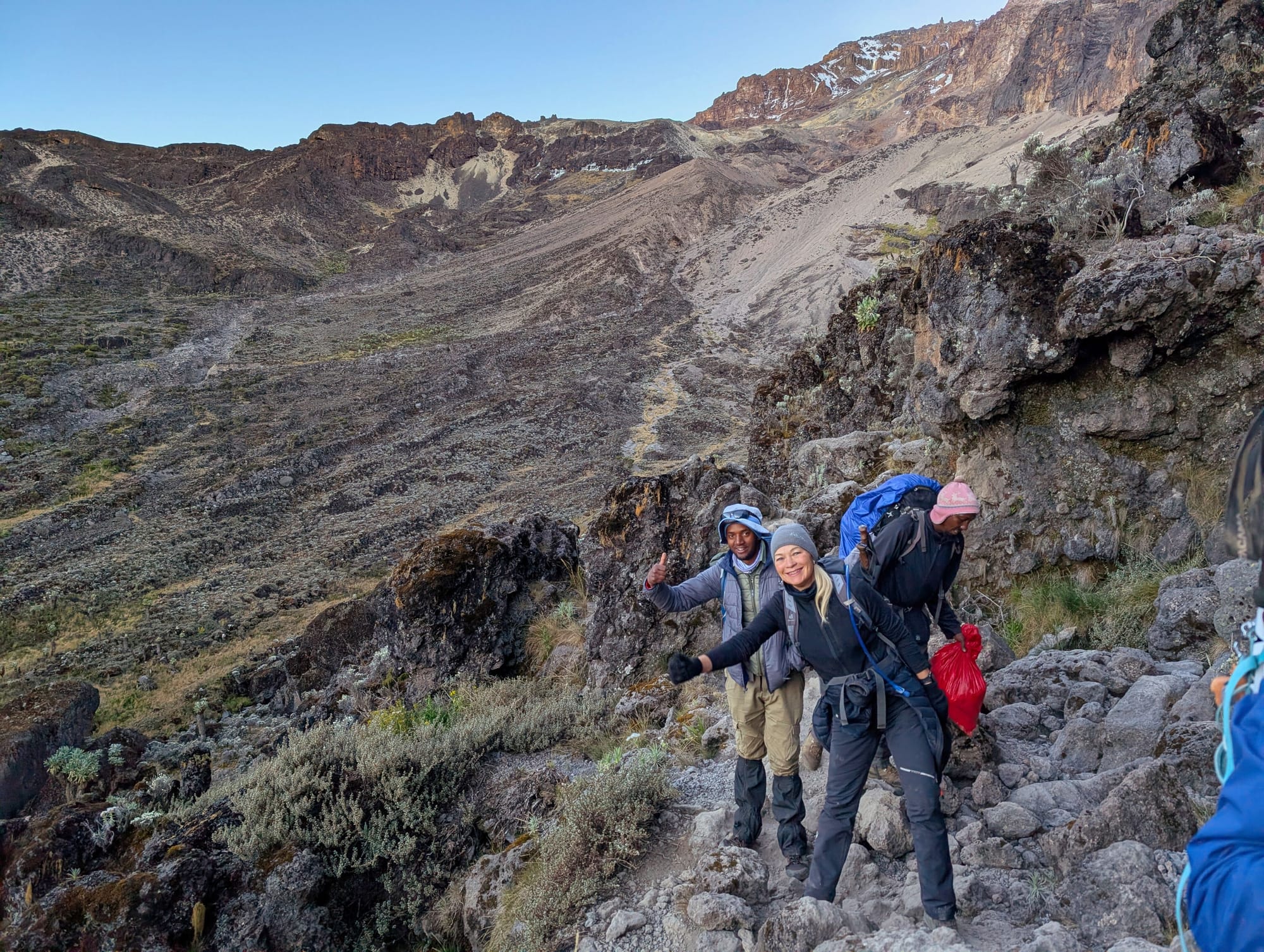
The Barranco Wall itself is more scrambling than classic climbing. In many places, you need your hands, but there is no continuous technical climbing section. For my fear of heights, it is surprisingly helpful that most of it goes upwards. As long as I am climbing and looking up, I do not have to look down into the depths as much. Two spots remain unpleasant in my memory: a section where we actually have to climb down for a while, and the famous Kissing Rock. The latter is over so quickly that I only realise afterwards that it must have been the well-known spot.
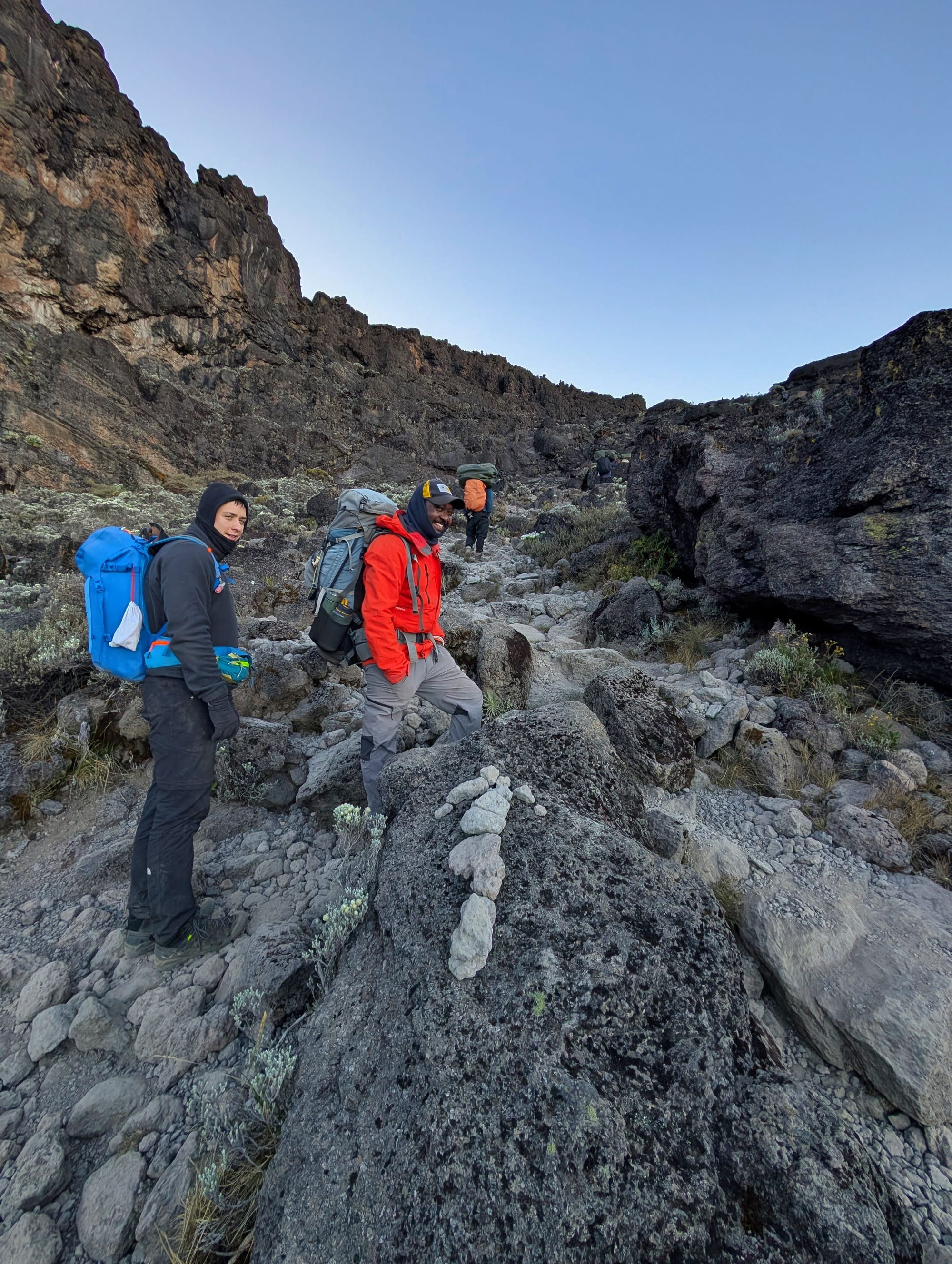
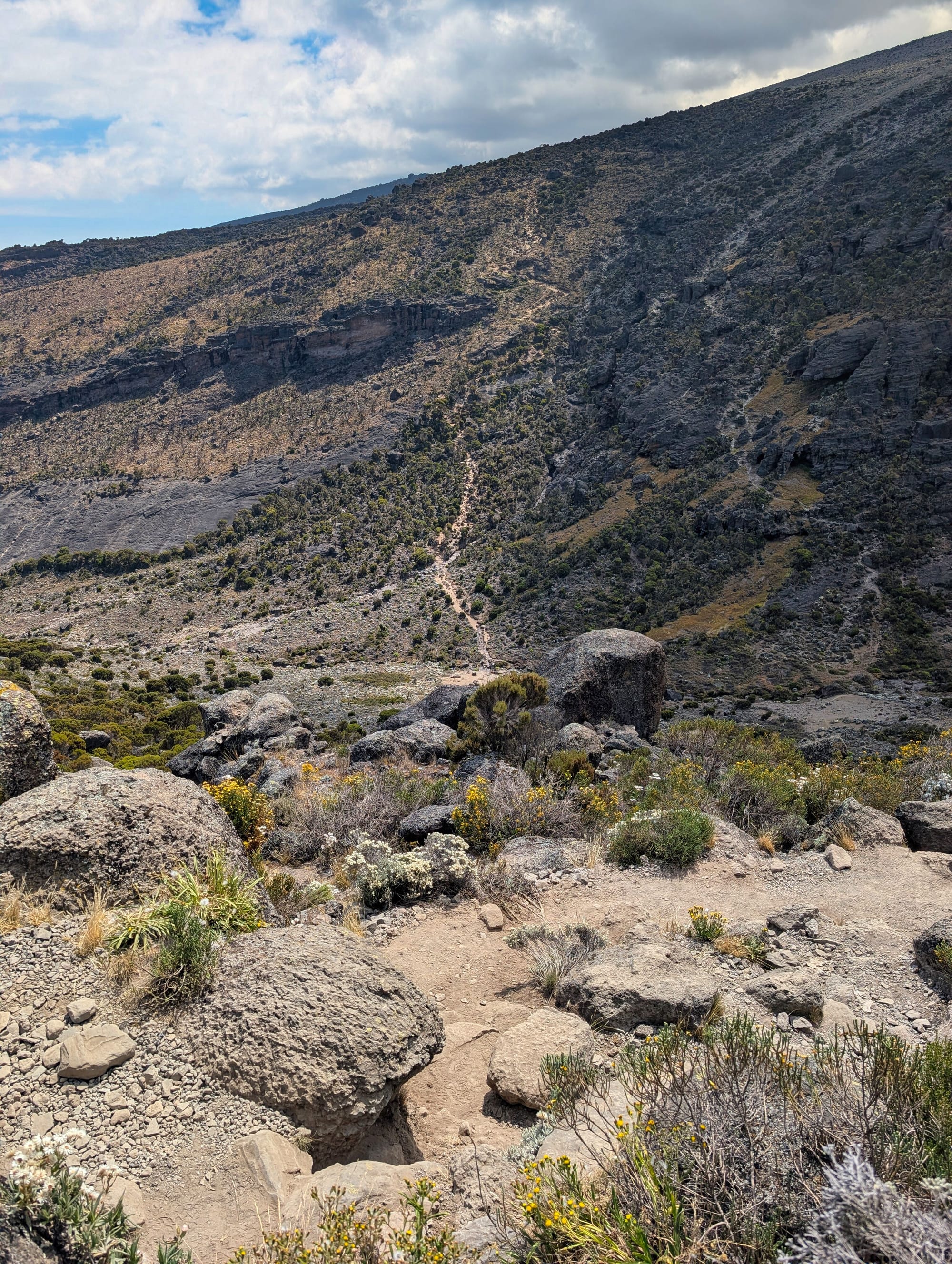
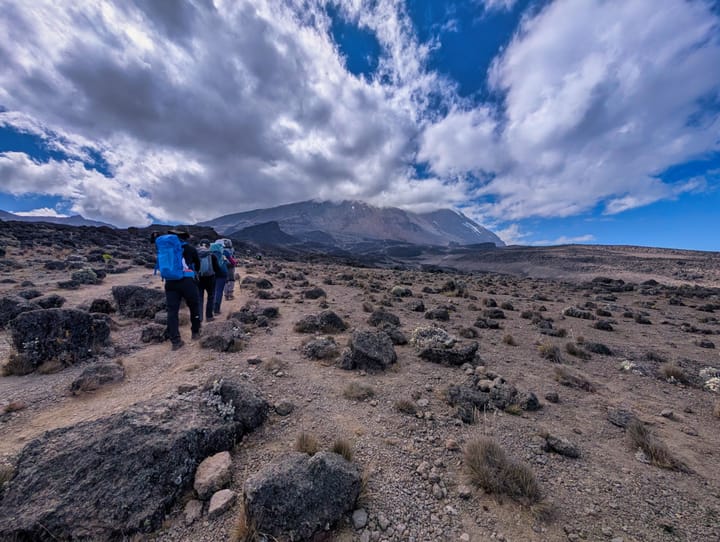
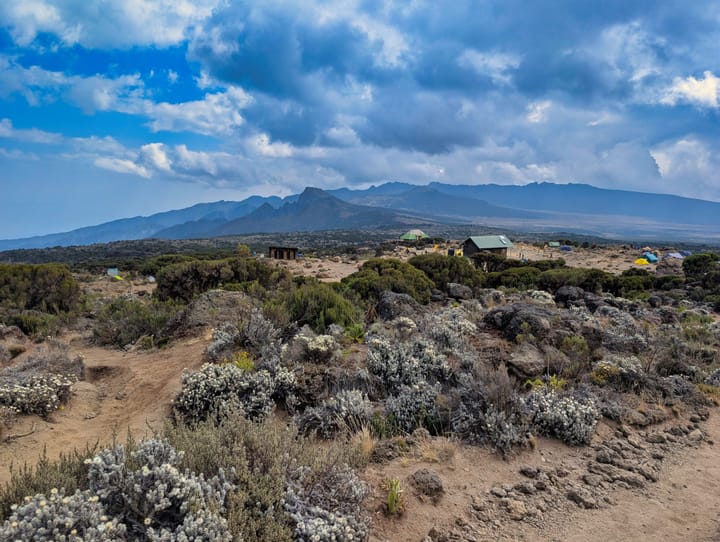
After the wall, the day is far from over. Several substantial ascents and descents follow towards Karanga Valley. These undulations in particular make the route physically demanding. Shortly before camp, the trail drops steeply into the valley once more before we have to regain the lost elevation.
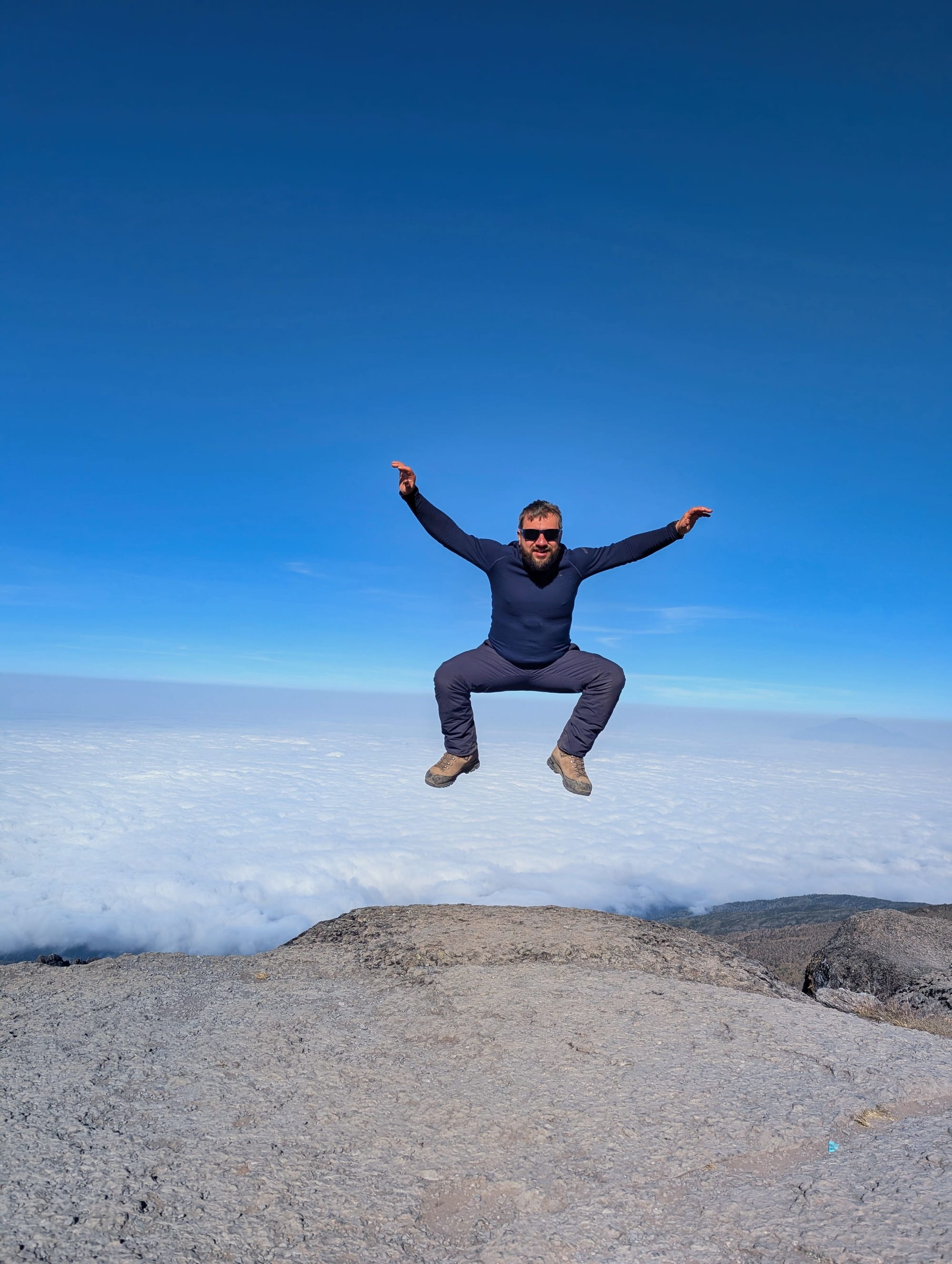
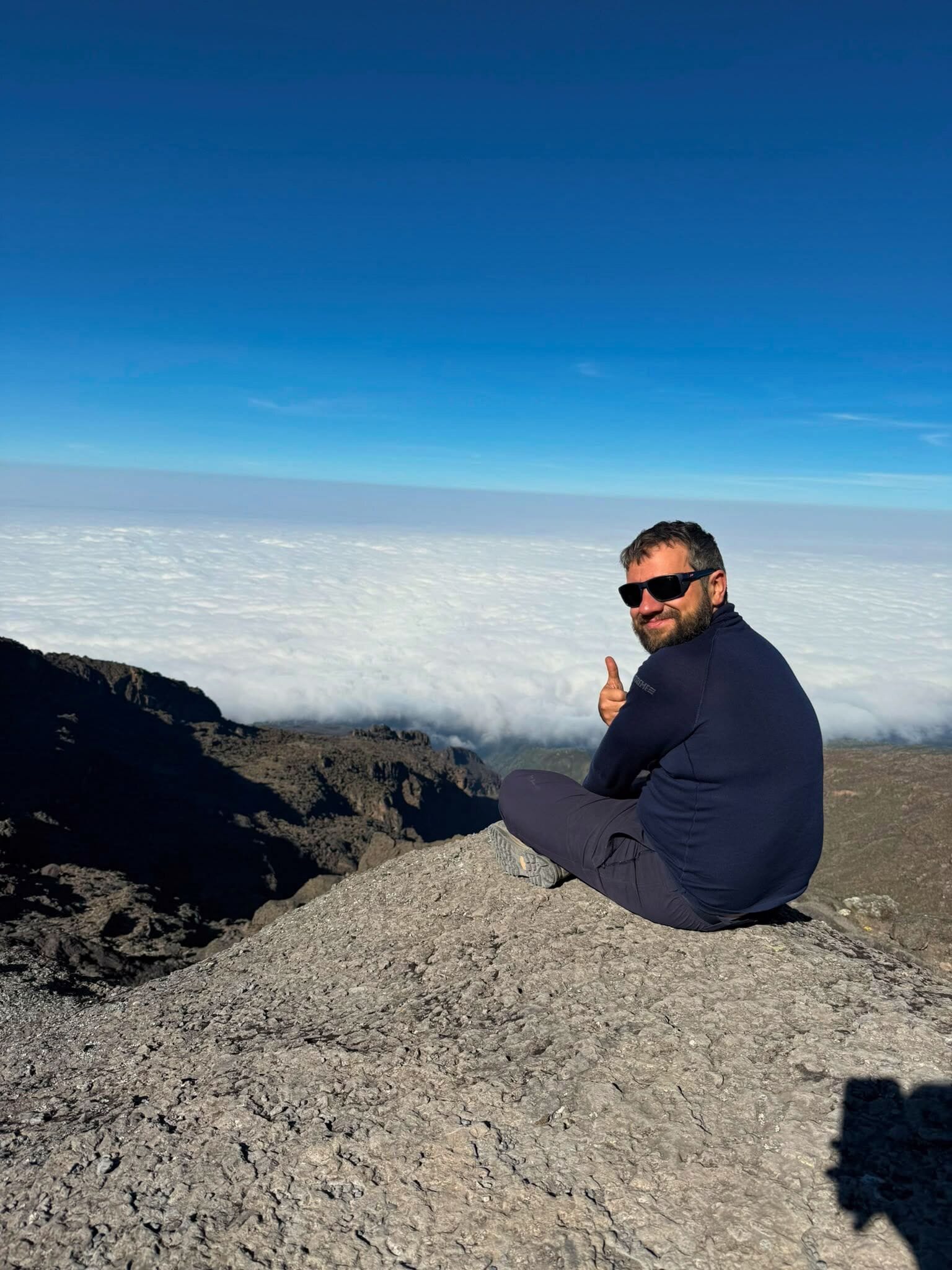
And done—the nasty wall
Destination: Karanga Camp and the last important water source
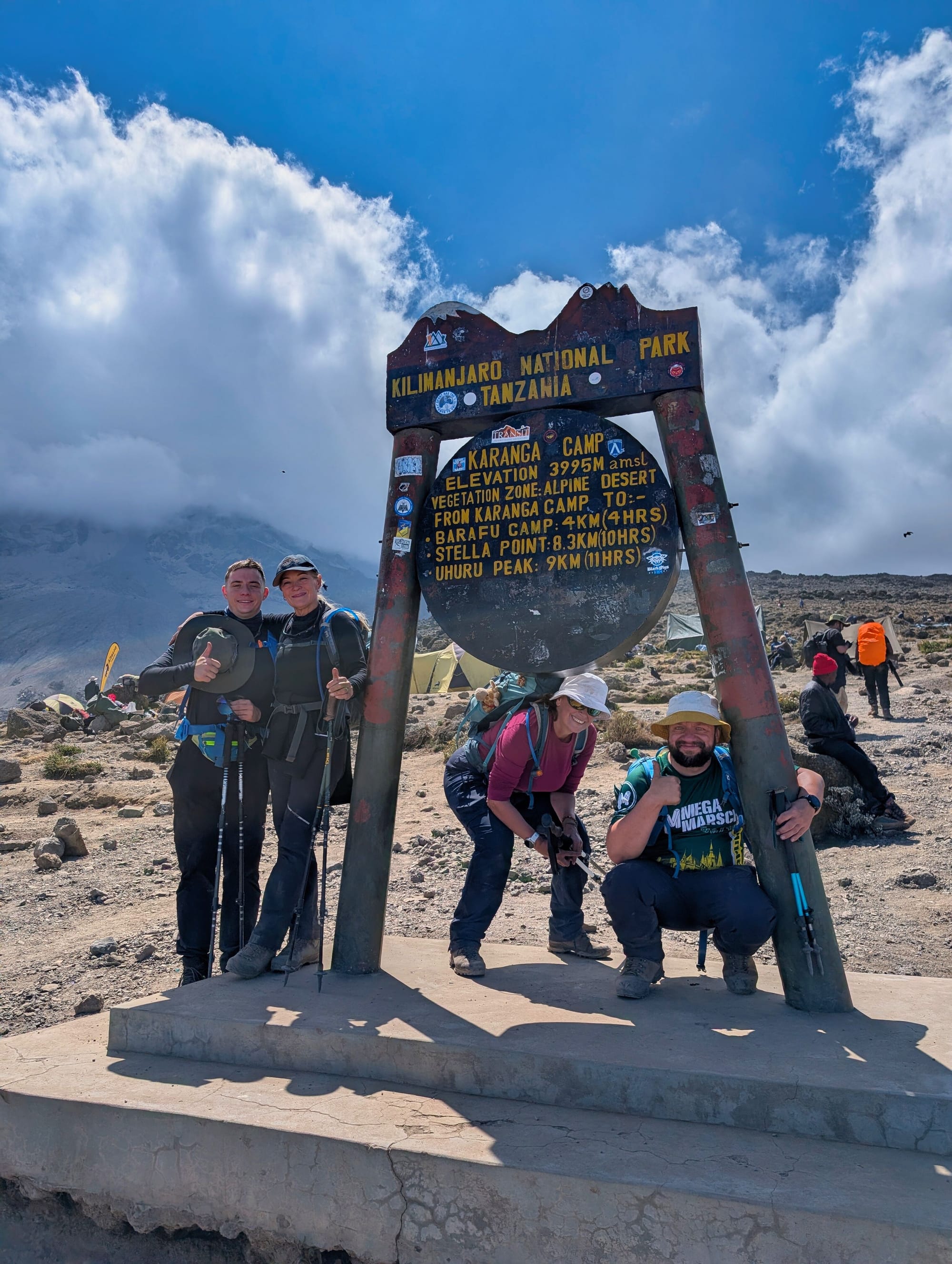
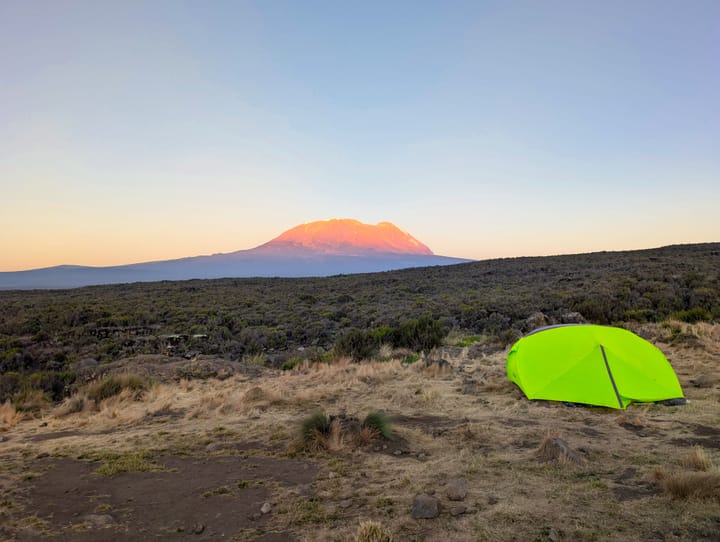
Karanga sits at around 4,000 metres on the southern side of Kibo. Once again, it is a tent-only camp with a ranger hut and basic latrines. What makes it special is less the buildings than the water logistics: Karanga Valley contains the last reliable running water source before high Barafu Camp. The porters have to carry water up from the valley to Karanga and, the following day, even onwards to Barafu.
That changes the way I see the bowl of warm water we are given for washing. Even this small piece of comfort means someone has to fetch the water, carry it up and heat it. At the same time, washing has become more of a symbolic act by now. The fine dust gets everywhere; after just a few movements, the water is brown and I feel as though I am mainly redistributing the dirt. I even cut my fingernails because the dust collects particularly stubbornly underneath them. A shower or bathtub now sounds like pure luxury.
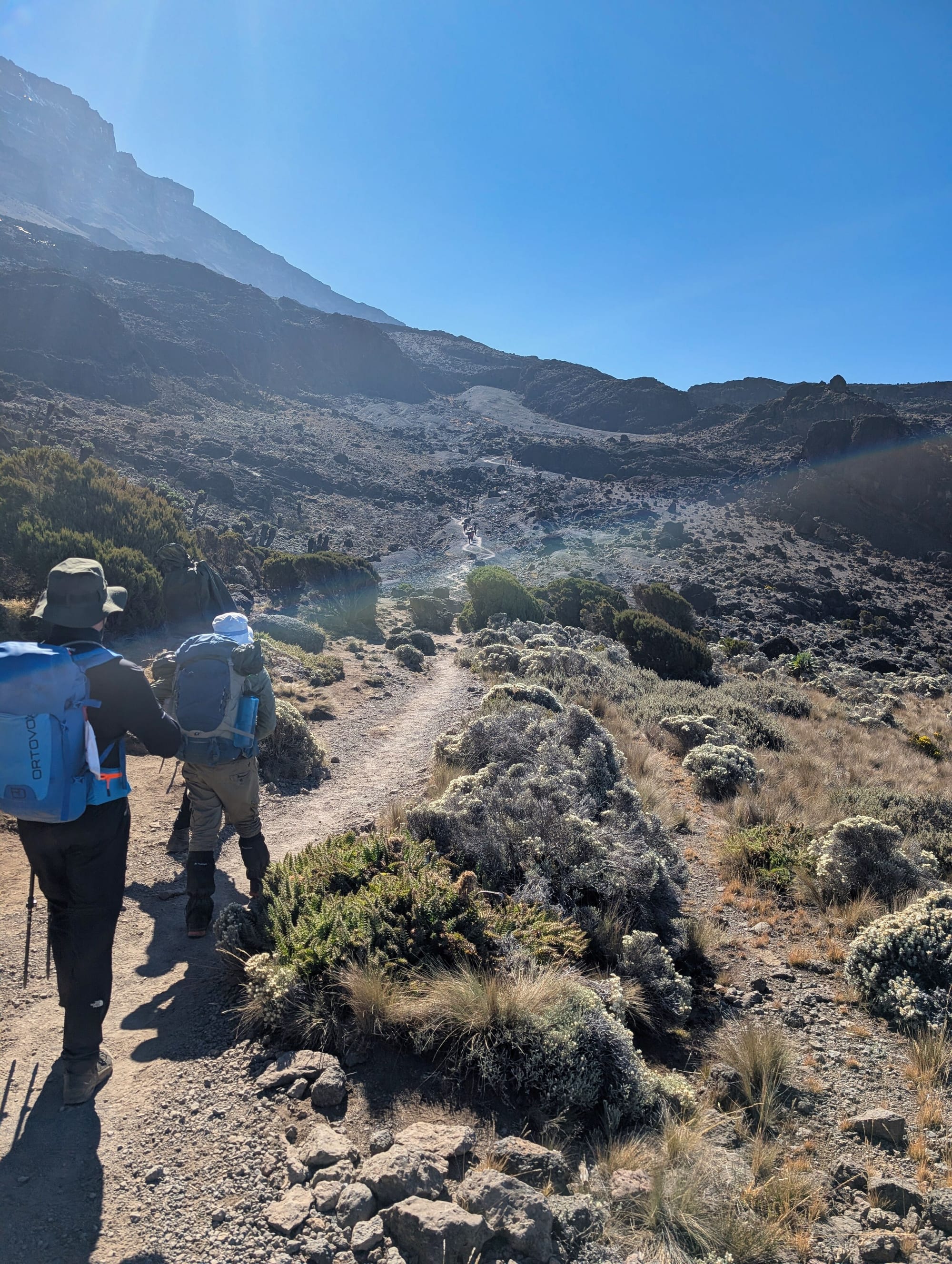
There is lunch at camp, and despite the altitude and headache, I am hungry. In the afternoon, I retreat to the tent, open it enough to let some air through, and above all try to gather my strength and get my head under control again.
My recap of the route
The Barranco Wall is far less bad than I had imagined. Our experienced guide Philbert plays a major part in that: instead of simply shouting motivational phrases, he gives very specific instructions: “Grab here, step there, look that way.” That works extremely well for my fear of heights because I can focus on a concrete task instead of thinking about the drop.
The harder part begins for me after the wall. The constant ups and downs put much more strain on my breathing and legs, and the intense sun makes my headache worse. Even so, I am very glad in the end to have made it up the wall. Before the trip, it almost felt like a key test of the route in my mind; now I know that, while challenging for me, it is very manageable.
Health assessment
My head is a little better in the morning, but not really clear yet. My stomach is also rumbling, so I have been awake since about four o’clock. Luckily, it does not become a major problem during the wall. The headache, on the other hand, gets noticeably worse again as the day goes on.
After the Barranco Wall, I am heavily exposed to the sun, and the many ascents and descents repeatedly push my breathing up. Andrea gives me magnesium; I also take electrolytes and drink plenty. Together with resting at camp, that apparently helps: by evening, the headache has almost disappeared. The cough, however, is still there, and my head still feels warm.
Garmin’s daily SpO₂ reading remains at 84%. The measurement elevation recorded by Garmin, at 3,847 metres, is slightly lower than the typical elevation of Karanga Camp; what matters more to me is that the value remains stable compared with the previous days. During the activity, my average heart rate is 108 bpm, with a maximum of 145 bpm.
Gear
In terms of clothing, this day is a lesson. The Barranco Wall remains in the shade for a long time in the morning and is windy and cold. So I dress very warmly: several long layers on my legs, warm hiking trousers, long-sleeved tops, fleece and a thick hat. That works well on the wall itself.
At the top, the situation changes abruptly. We come out into full sun, and my clothes are suddenly far too warm. I increasingly feel that the thick hat is practically heating up my already aching head. So the challenge on Kilimanjaro is not just getting cold, but the rapid switch between shade, wind and intense sunshine.
Today also finally settles the question of sunglasses. The expensive Julbo goes into my backpack, while the cheap category 4 pair stays on my nose. They fit more comfortably, do not pinch, and simply give me more reliable results. Price and practicality are not the same thing.
Join the conversation
Become a member of One More Step to leave a comment.