
Kilimanjaro Terms Explained: “Pole Pole”, Elevation Gain & Trekking Language
From “Pole Pole” and acclimatisation to Summit Night, AMS and route choices: a practical Kilimanjaro glossary of the mountain terms and rules of thumb worth knowing.
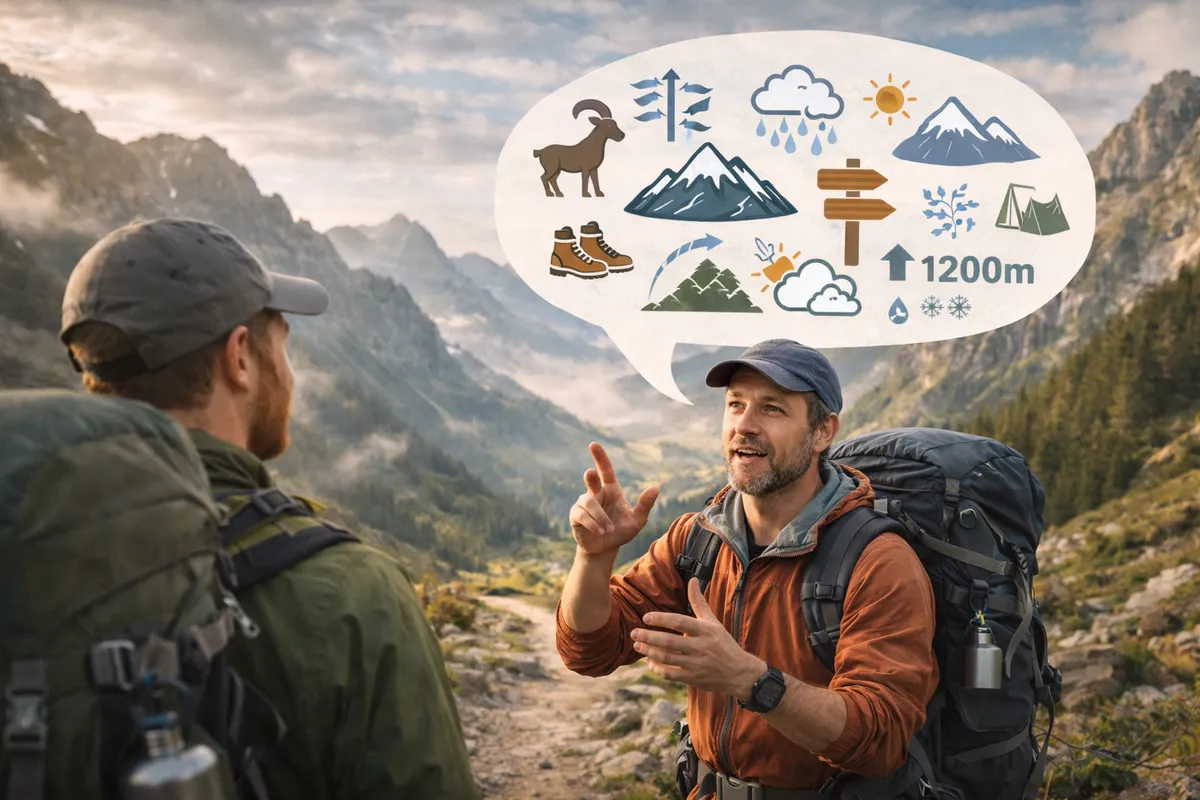
A whole new language
In the days after first deciding to climb Kilimanjaro, I realised: I don’t understand the language.
Not Swahili – but the language of the mountain and its followers.
The more I read, the more often I felt that everyone else knew something I was missing.
Terms, abbreviations, phrases used everywhere as if they were self-explanatory – yet hardly anyone actually explains them.
- Acclimatisation
- Summit Night
- Push Day
- Pole Pole
- Lemosho, Machame, Northern Circuit
- AMS, HAPE, HACE
I had to learn that fitness does not equal capability.
That elevation gain can be more dangerous than kilometres.
That time on the mountain is more important than pace.
So, little by little, I learned a new language and new rules – and realised I was only at the very beginning of understanding this system.
The language of Kilimanjaro – terms & rules of thumb
Medicine & altitude
Acclimatisation
The body’s adjustment to altitude through gradual ascent and planned rest days.
The most important factor for a safe summit attempt.
AMS (Acute Mountain Sickness)
Acute mountain sickness. Typical symptoms include headaches, nausea and dizziness. Common – but to be taken seriously.
HAPE
High Altitude Pulmonary Edema (fluid in the lungs caused by altitude). Life-threatening; immediate descent is necessary.
HACE
High Altitude Cerebral Edema (swelling of the brain caused by altitude). Altered consciousness, coordination problems. A medical emergency.
Pulse oximeter
A device for measuring blood oxygen saturation. Used during daily medical checks.
Routes, days & key sections
Summit Night
The night of the summit push. Usually starting around midnight, with several hours of climbing in darkness, cold and thin air.
Push Day
The toughest day of the trek: the summit attempt followed by a long descent in one go.
Base Camp
The last camp before the summit (for example, Barafu or Kibo Camp).
Uhuru Peak
The highest point on Kilimanjaro at 5,895 m – the goal.
Barranco Wall
A steep rock face on several routes. Technically straightforward, but exposed. Psychologically demanding, especially if you are afraid of heights.
Scrambling
Moving using hands and feet without a rope. Not climbing, but not a normal hiking trail either.
Routes & selection terms
Lemosho Route
A long, scenically varied route with good acclimatisation.
Machame Route
Very popular, shorter, steeper, busier, with less time for acclimatisation.
Northern Circuit
The longest route, with the best acclimatisation. Fewer groups, higher costs.
Summit Success Rate
The percentage of participants who reach the summit. Highly dependent on route and duration.
Mountain phrases & rules of thumb (worth knowing)
Pole Pole
Swahili for “slowly, slowly”. Not a saying – a survival rule.
Go high, sleep low
Climb higher during the day, sleep lower at night. It challenges the body without overloading it.
Climb high, sleep low
The same principle – often phrased differently, with the same meaning.
Slow is fast
Walking slowly saves energy and ultimately improves your chances of success.
Altitude beats fitness
Good fitness does not protect you from altitude sickness.
Eat even if you’re not hungry
Altitude reduces your appetite, not your energy needs.
Summit is optional, return is mandatory
The summit is optional – returning healthy is not.
Listen to your body
Numbers help, but symptoms decide.
Summit Fever
The dangerous urge to keep going at all costs, even when it no longer makes sense.
What I understood during those days
This is not a mountain you can “conquer” through willpower.
Kilimanjaro operates by its own rules.
You can learn them.
You can respect them.
Or you can ignore them – and pay the price.
In those two days, I did not understand the mountain.
But I started to learn its language.
And that is probably the first real step upwards.
Join the conversation
Become a member of One More Step to leave a comment.